Racing lines explained for new players
The racing line is the path that lets a car carry speed smoothly through a corner. This guide explains the idea, the role of braking points and a calm way to practice.
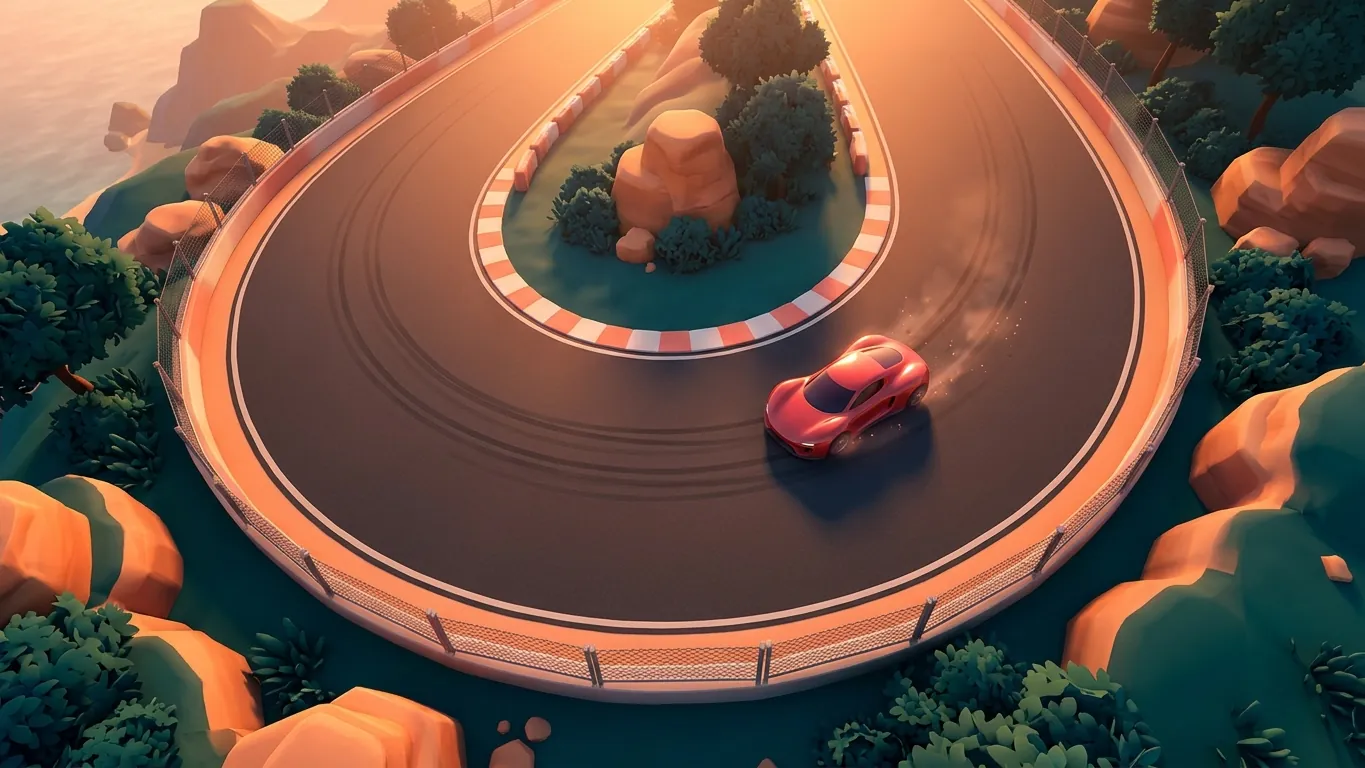
What a racing line actually is
In most racing games, the fastest way around a corner is rarely the shortest one. The racing line is a path that makes a corner as gentle as possible, so the car can keep more speed without losing grip. The classic shape is outside, inside, outside: you approach from the outer edge of the track, cut toward the inside at the apex, and let the car drift back to the outer edge as you exit.
By widening the arc of the corner, you reduce how sharply the car has to turn. A gentler turn means the tires have more grip left over for speed. That simple idea sits behind almost every corner you will drive, though real tracks add complications like camber, bumps and linked bends.
Braking points and why they matter
A racing line only works if the car arrives at the corner at the right speed. That is where braking points come in. A braking point is a fixed landmark, such as a sign, a shadow or a change in the track surface, where you start slowing down.
New players often brake too late and run wide, or brake too early and lose time. Picking a consistent landmark removes the guesswork. Once you brake at the same place every lap, you can adjust it in small steps and actually feel the difference. Many games offer a braking guide on the track; it is a useful learning tool, and you can switch it off later.
A simple practice routine for one track
Learning one track well teaches you more than driving many tracks once. Here is a routine you can adapt.
- 01
Choose a forgiving car
Start with a modest, stable car rather than the most powerful one. Lower speeds give you more time to think about each corner.
- 02
Drive slow, clean laps
Focus on staying on the track and following the outside, inside, outside shape. Speed comes later.
- 03
Pick braking landmarks
For each major corner, choose a visible landmark and brake there every lap.
- 04
Adjust one corner at a time
Move a single braking point slightly later or earlier, and notice how the exit changes.
- 05
Review and rest
Watch a replay if the game offers one, then take a short break before your next set of laps.
Using assists without depending on them
Driving assists such as traction control, stability control and anti-lock brakes exist to make the car easier to handle. There is nothing wrong with using them. They let you focus on lines and braking while the game manages some of the car's behavior.
If you want to learn more about how the car responds, try lowering one assist at a time rather than turning everything off together. Many players find that reducing traction control first helps them understand throttle control on corner exits. Go back to a higher setting whenever the game stops being fun.
Smooth inputs over raw speed
The most common thread in racing advice is smoothness. Sudden steering, sharp braking and stamping on the throttle all unsettle the car. Gentle, progressive inputs keep the tires working within their grip.
It can feel slower at first, but smooth driving tends to be more consistent, and consistency is what lets you improve lap after lap. Treat each session as practice rather than a test, and the racing line will gradually become second nature.
Related articles
 Car tuning in games, explained plainly
A calm guide to tuning cars in racing games: tires, suspension, gearing and differentials explained without jargon, with a simple workflow to follow.
Read more
 Controller, wheel or keyboard: choosing a driving setup
Comparing controllers, steering wheels and keyboards for driving games, with practical settings advice to help you choose a setup that suits your space.
Read more
 Why open-world driving can be the most relaxing way to play
An opinion piece on why cruising through open-world driving games can feel calm and rewarding, and how to enjoy slower, aimless drives in your free time.
Read more